Video Samples

31 Jul

As promised (albeit a while ago), I’m putting videos of my prior public speaking experience here on my blog. The goal is to start making a living as a public speaker beginning in August. I will gladly take lower-priced work for now but eventually will raise my prices as more work comes in.

The following videos were created on different subjects over the past few years. In 2021 I took part in a guided conversation put on by the Portland Gay Men’s Chorus’ DEI committee, of which I’m a member. Reid Vanderburgh, Santo Cavallaro, and myself all presented different aspects of living with disabilities and how frought life can be when dealing with stereotypes and misunderstandings. My portion of the video lasts approximately 17 minutes. Please take the time to watch the rest of the video if you’re willing.

The second video was created during the pandemic and appropriately focuses on “How to Create Better Stage Presence on Zoom.” I hope you enjoy it and gain some useful information that can help you create better presentations on Zoom or other platforms.

https://media.pdx.edu/media/t/1_sjncf5p1

Breaking Barriers

17 Jun

The Portland Gay Men’s Chorus will be performing its ICONS concert this Saturday, June 21, at 7 p.m. at the Arlene Schnitzer Concert Hall. In our performance we will be showcasing several different storytellers depicting different aspects of our lives in the LGBTQ+ community. While my piece wasn’t chosen, I decided to share what I wrote here as an example of what you might see during our concert. In the section entitled “Breaking Barriers,” we were asked to tell the audience about a time we “broke through” in some way such as an achievement, transformational conversation, or just a monumental event relevant to our LGBTQ+ experience. My answer to that question is below.

Long before I’d learned the word “intersectionality,” I was very much aware that I lived in several distinct communities. Unfortunately, I also knew that I’d likely be facing various levels of prejudice simply by belonging to them.

I was born with an extremely rare neurological disorder known as Moebius syndrome which left my face bilaterally paralyzed. Because so few people knew what Moebius syndrome was, I was subjected to a great deal of bullying and misunderstandings from people who thought that I was mentally impaired. Even though I had a strong support system at home, I still suffered from crippling self-doubt and fear about how others perceived me.

When I came out of the closet at the age of fourteen in 1983, I was already aware that being out at that time was incredibly risky. Although I came out of the closet to my mothers and some close family friends, because of my prior experience of being bullied, I had no desire to face even more prejudice against me and didn’t tell many other people at first. As a result, my coming out process was a slow one, which ultimately culminated with me joining the Portland Gay Men’s Chorus in 1992 and becoming almost completely out of the closet in the process.

About two years after joining PGMC, while driving home with my stepmother, I turned to her and said, “You know, I’ve counted five ways that people could be potentially prejudiced against me. I’m gay, disabled, Jewish, short, and left-handed.” My stepmother thought about this, then turned to me and said, “Well, yes, that’s true that people might discriminate against you. But what would happen if you looked at all of these things as gifts?”

That thought floored me. I’d learned to accept the various pieces of myself over the years, but many times they’d felt like obstacles to be overcome. Not once had I ever felt that these components of my life were gifts. I don’t remember the rest of that conversation. I only knew that my self-perception had been upended by a very timely insight.

Today, many years after that conversation, I now understand what my stepmother meant, and it taught me an important lesson: Sometimes, for you to best see yourself, it takes an act of compassion from another person for you to best recognize your gifts.

ICONS Is Coming!

31 May

Our upcoming concert, ICONS, celebrates the artistry of LGBTQ+ musicians from past and present. Please join us on June 21 at 7 p.m. at the Arlene Schnitzer Concert Hall as we turn the stage into a grand nightclub showcasing our finest talent.

The Fragility of Spring

7 Apr

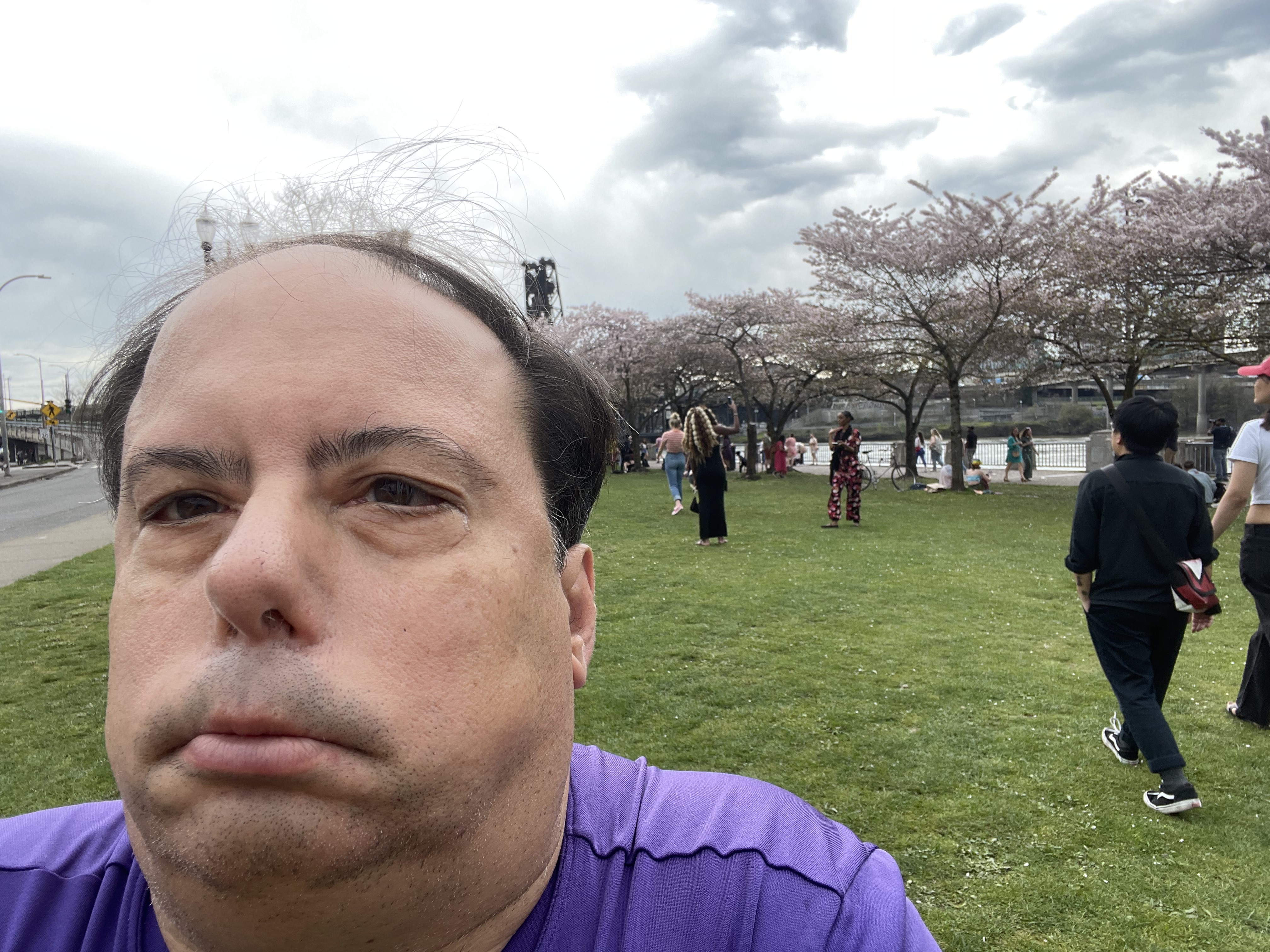
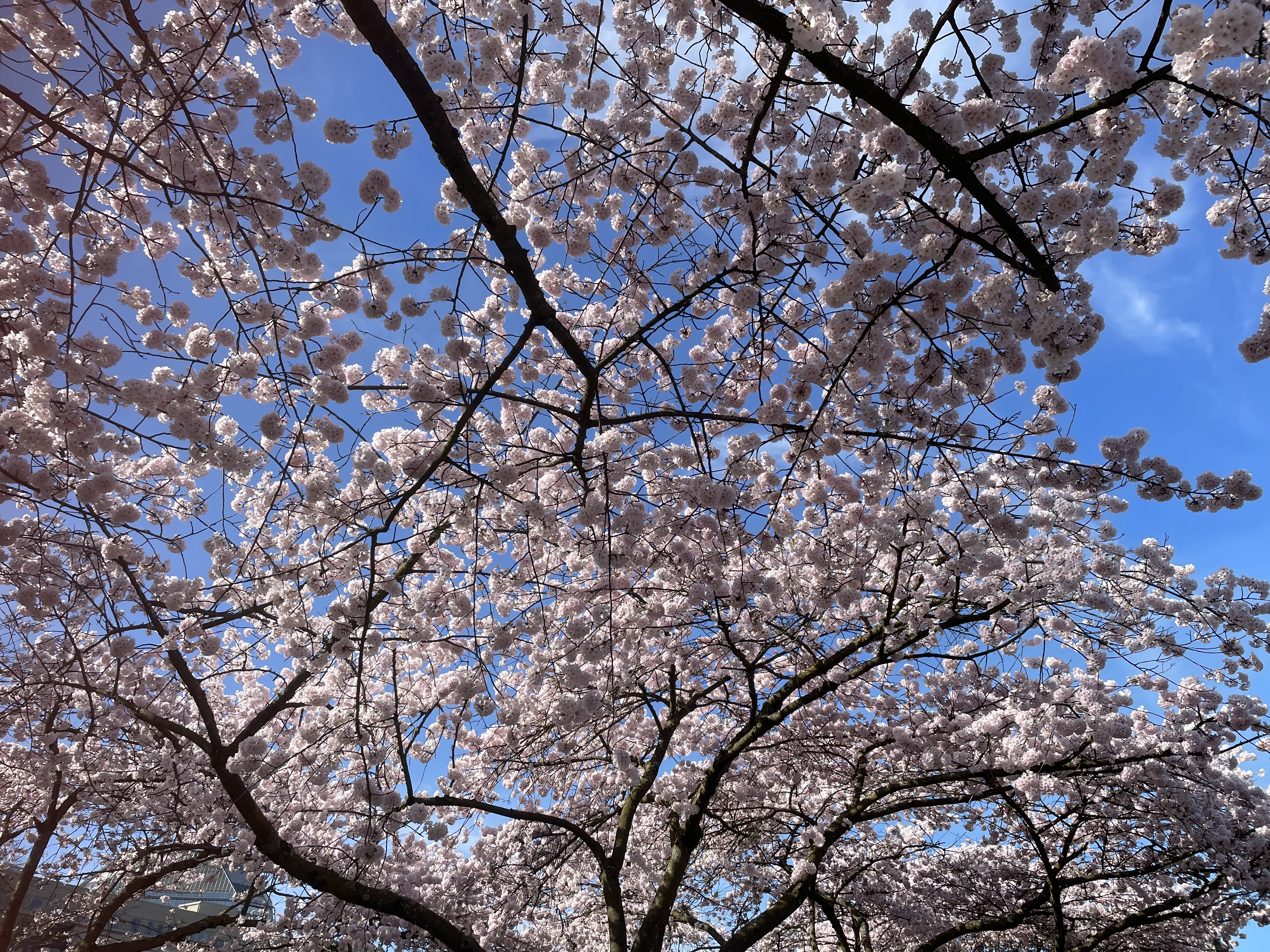
Every year I make an effort to go down to the Waterfront Park in Portland, Oregon to capture on film the blooming of the trees. Throughout much of my adult life, I’ve made it to the park without fail, but it’s only in the last few years that I decided to photograph the event. And every year, I wonder what would happen if the flowers didn’t bloom.

There’s a very old myth about how the seasons came to be. In Greek mythology, the fertility goddess Persephone was kidnapped by Hades in order that he might make her his bride. There are several variations on this myth, but for the sake of brevity, after eating a pomegranate, Persephone was required to remain in the underworld for a set period of time – usually three months, but sometimes more depending on the the number of seeds eaten and according to who is telling the story. Her return heralded the beginning of spring, at which time her mother Demeter rejoiced at her return. Persephone’s return to the underworld signaled the beginning of winter.

But what would happen if the flowers didn’t bloom?

Each year I watch the trees as the buds start to sprout. What would happen if they didn’t emerge, or the buds remained in stasis rather than fully growing into leaves? How would this affect our outlook if spring never came? It may sound a bit silly at times as many of us take spring for granted, but I often look at this season as my favorite, as well as the most ephemeral. The beauty of spring is offset by its fragility. The cherry blossoms bloom once a year and then vanish. The birdsong begins and continues throughout the summer as they find their mates before flying away in the autumn. And no spring is ever completely the same.

If Persephone chose to maintain her residence in the underworld for a longer period of time, I imagine the spring season would be very brief, and summer would begin sooner. I have no doubt the harvest season would be affected as well. And of course the length of spring changes in different climes anyway, including here in the United States. Our spring here in Oregon is quite different from what you might see in Minnesota. But if Persephone never returned, the flowers wouldn’t bloom, and many of these seasonal changes wouldn’t come to pass. We’d see a much more barren planet than we’d ever want without the advent of spring and the return of the crops we need for our very survival.

I celebrate spring for many reasons. The return of warm weather and the blossoming of the cherry trees are only a very small part of it. I celebrate the return of possibility and growth, even though I’m aware those things have never really left us. I celebrate spring for the renewal of romance or of finding of new love. But mostly, I celebrate it because the alternative is that we remain in stasis, forever immutable and depriving ourselves of new opportunities for changing who we are, even if those changes are necessary or inevitable.

A Little Extra…

20 Mar

Our joint concert is coming up in less than ten days. The Portland Gay Men’s Chorus, the Portland Lesbian Choir, and the Portland Pride Bands will be performing at the Arlene Schnitzer Concert Hall in our spring concert, “Our New World,” on Sunday, March 30 with our special guests, Bridging Voices. Tickets are almost sold out, so if you’re still on the fence about going, don’t delay. There are still some seats left on the upper balcony, so snap them up as soon as possible.

Below is an interview on AM Extra with all three of our conductors: Dr. Braeden Ayres, Mary McCarty, and Joseph Accuardi-Gilliam. Enjoy!

Knowing When to Say No

20 Mar

At last, it’s come to this. I have so many video games at home, both physical copies as well as from the various libraries on my systems (Playstation Plus, Nintendo Online, and Game Pass) that I’ve decided to drastically cut down how much I spend on this hobby. I’d already reduced my budget for video games anyway for various reasons, but now that I have a huge backlog, I’m much more likely to simply finish up what’s there. In addition, any “new” games that I want to get can be downloaded from those libraries, meaning that I’ll only spend money on the games I want once every few months.

I’m actually overjoyed with this decision since it’s been obvious for a while that there’s no conceivable way to finish every game in my collection for at least a year unless I have more time freed up. Additionally, with the job hunting, finishing the test for my medical billing and coding certification, and other activities keeping me busy, that’s not going to happen anytime soon. So yes, having more money available due to less spending on my hobbies isn’t necessarily a bad thing.

I’m implementing a similar strategy on buying more books as my library has grown substantially, but my book space is at capacity. There’s only one book that I’m currently looking at buying, Ursula K. Le Guin’s The Books of Earthsea: The Complete Illustrated Edition, and it’s big enough that I’d have to clear out more space than I have now. Knowing when to say no to buying more things has been an essential lesson I’ve learned while being unemployed. I’m committed to being more frugal than ever for the next year, even when I eventually obtain a new job.

Our New World

11 Mar

On March 30, 2025 the Portland Gay Men’s Chorus is partnering with the Portland Lesbian Choir and the Portland Pride Bands with our special guests, Bridging Voices, for our spring concert, “Our New World.” Tickets are selling fast, so please reserve your seats immediately. The discount code is FAFD10 and will end March 17 (St. Patrick’s Day).

The link for the PGMC website is below. I look forward to seeing all of you at our upcoming concert.

Statistical Improbabilities

10 Mar

How often do you pay attention to statistics when you’re thinking about going out for a specific job or activity? And what do you tell someone who thinks you shouldn’t be able to accomplish something because so few people succeed at it?

Recently, for whatever reason, I started paying attention to statistics, especially pertaining to my own life and how unusually singular my circumstances were. Case in point: I was born with an extremely rare congenital neurological disorder known as Moebius syndrome. This condition is so rare that significantly less than 1% of the human population has it. Furthermore, at the time I was diagnosed, approximately 300 known cases had been correctly diagnosed since 1900.

Upon learning about my condition, the doctors spoke with my parents, earnestly stating that I should be placed into an institution since the chances of me pursuing a normal life were very remote. Thankfully, my parents decided against this course of action and took me home. By the age of three, we discovered I had perfect pitch after I could play the theme song from the movie Patton on the piano note for note. At the age of four, I taught myself to read which facilitated my entry into the talented and gifted (TAG) program. Regarding the prevalence of people with perfect pitch, 1 in 10,000 people have it, while 6% of all children in the United States participate in the TAG program.

When I entered high school in the early to mid 1980s, I discovered my love of acting and musical theater and very much wanted to consider acting as a career. However, there were extremely few actors with disabilities on television and film in those days. It wouldn’t be until 2007 that I finally made the decision to consider acting as a viable career, and even then, I was very wary of the statistics involved. Approximately 2% of all performers can make a living in the industry, and only 3% of all lines read from scripts are given to actors with disabilities.

I made it a point to learn about many performers with disabilities and their contributions to television and film but was not at all surprised to discover that we were not represented very well in the media. I admit to being daunted by those figures, but I nevertheless persisted in performing as a singer and very occasionally as an actor. To continue building on my acting skills, I ended up joining Toastmasters in 2013 to become a better actor and public speaker. I hadn’t even considered becoming a Distinguished Toastmaster until at least several years into my journey as a public speaker, whereupon I’d also learned that less than 1% of all Toastmasters become Distinguished Toastmasters.

Mark Twain is often quoted as saying, “There are three kinds of lies: Lies, damn lies, and statistics.” At this point, I think I’m closer to believing him than ever. Or to put this another way: At what point does paying attention to all these statistics become a distraction? Granted, statistics can be a great way of measuring success in a specific field of study, but it also has the negative effect of telling someone, hey, maybe you’re not ready for this profession yet. After all, if only a small percentage of people make a living as a performer, shouldn’t you consider alternatives, or at least have a Plan B?

The truth is that life isn’t all about statistics so much as it is about taking the first steps towards what you need to accomplish. And here’s what I’ve discovered: Statistical improbabilities can be thwarted by creating attainable goals, and no one should really tell you what you’re able to accomplish, even if it’s meant as sound advice. If you want to be an actor, for example, go for it. Maybe you won’t make a living from it, at least at first, but there are a lot of positive benefits from developing acting skills. Learning how to perform onstage can help boost your confidence, enhance your creativity, help you develop empathy for others, and provide a safe space to explore different emotional states. Above all, if it’s something you enjoy, keep at it, and ignore the naysayers who believe it won’t benefit you in the long run.

This year I’m committed to finishing my Distinguished Toastmasters Award, and the end is almost in sight with only a few more exercises to go before completing the process. Never mind the fact that I’ll be in the 1% of all Toastmasters who complete this journey; the main goal is to become an outstanding professional speaker, not to worry about the rarity of the circumstances or whether I can turn this into a full-time career. The point is to turn those chances you take in whatever career you choose into attainable goals that you can follow. I wish you well on your journey.

Today’s Headshots

18 Oct

This isn’t a particularly long post. I just wanted to remind people that most of the time, you’re only as good as the headshots you put out for your auditions. Yes, I know the auditions themselves are important, but creating a great first impression on paper matters just as much as the best performance you give to the casting agent or director for the project you’re trying out for.

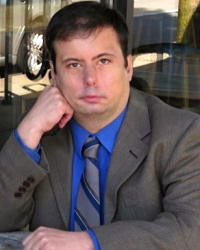
The first headshot was taken by my mother, Linda Freedman, over a decade ago. At that time, a bakery was still open next to my apartment building. We took several pictures there, and this is the photo that I continue to use for my professional profile. The second photo, below, was taken through Boly:Welch after I’d completed a job training program two summers ago. They offered free headshots for all of us who participated in their workshop, and naturally I couldn’t say no. This photo can also be found on the Actors in Action website. Interestingly, despite these photos being taken years apart from each other, I don’t look as if I’ve aged that much except for the weight gain and thinning hair. You be the judge.

Revisiting Earthly Harmonies

11 Oct

In 2009 the Portland Gay Men’s Chorus performed “Earthly Harmonies,” a concert featuring a variety of pieces from different countries. This was one of my all-time favorite concerts, and I’d often wished we could perform some of those songs again. Thankfully, our holiday program, entitled “Merry Everything,” evokes the spirit of that concert in that we are singing winter songs from around the world. Furthermore, one of the songs from “Earthly Harmonies” makes a return appearance.

“Zikr,” composed by A.R. Rahman, wrote this piece of music for the soundtrack of the film Bose: The Forgotten Hero. In our first performance of this song, my fellow chorus member Vikram Srinivasan was our soloist. The current version that we’ll perform does not have the same solo part but is still stunning in its beauty. Thank you to A.R. Rahman for this wonderful masterpiece as well as our conductors, Dr. Braeden Ayres and Garrett Bond, for bringing it back for an encore performance. You may follow the link below to see our original performance of “Zikr.” I hope you enjoy it.

https://www.youtube.com/results?search_query=zikr+portland+gay+men%27s+chorus